
The Rising Importance of Digital Transformation.

Digital transformation is now a survival strategy for established firms, not a luxury. Leaders in a variety of sectors, including banking, manufacturing, retail, and logistics, are using data, software, and artificial intelligence (AI) to remain resilient and competitive in volatile markets.
The global investment data demonstrate how significant this change is: According to International Data Corporation, global spending on digital transformation (DX) is expected to reach around $3.9 trillion by 2027, indicating a trend of consistent double-digit growth. Nevertheless, research conducted by McKinsey & Company and BCG regularly demonstrate that only around 30% of digital transformation projects are successful in reaching their objectives, even with these massive investments. Execution, not technology, is the problem; adjustments in operating model, talent, and leadership determine whether programs stall or succeed on a larger scale.
Examples of Traditional Businesses Leading the Way.
1. Walmart: Reinventing Retail.
Traditional giants have shown how to do it effectively. Once regarded as an antiquated retail giant, Walmart is today a world leader in omnichannel sales. Walmart announced one of the best periods for its digital operations in Q2 FY2026, with 25% growth in global e-commerce and 26% growth in U.S. online sales [Source: AP News & NewYork Post]. By investing in its Walmart+ subscription and utilizing its physical stores as fulfillment centers, the company has demonstrated that traditional retail can effectively compete with digital-first companies.
2. Domino’s: A Pizza Company Powered by E-Commerce.
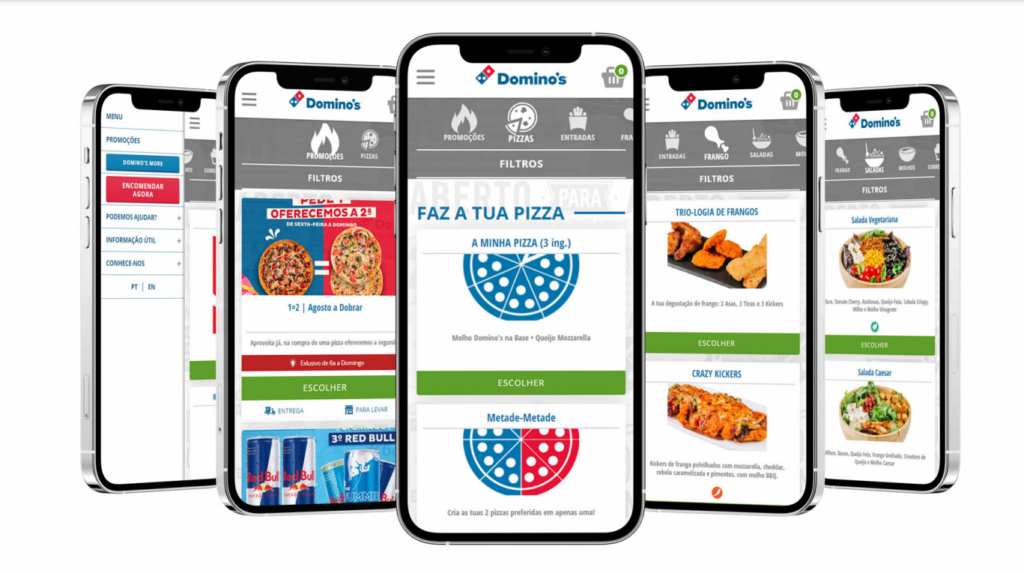
Similarly, Domino’s Pizza become what many refer to as “an e-commerce company that sells pizza.” Domino’s has demonstrated how a traditional quick-service brand can create its own IT ecosystem to expedite ordering, tracking, and delivery, as evidenced by the fact that over 65% of its sales are produced through digital means as Forbes reveals.
3. L’Oréal: Beauty Tech at Scale.
Another example is L’Oréal, which has positioned itself as both a beauty corporation and a tech-driven brand. According to the L’Oreal 2024 Annual Report, e-commerce accounted for 28.2% of its sales in 2024, totaling €12.3 billion, and was backed by 8,000 data, IT, and digital specialists. L’Oréal has demonstrated how even century-old companies can embrace technology without losing their identity by incorporating AI-powered skin diagnostics, augmented reality try-on experiences, and sophisticated data platforms into digital services centered around its core products.
4. JPMorgan Chase: Banking on AI.
Similar findings can be found in the banking industry, where JPMorgan Chase’s leadership specifically links AI-driven breakthroughs to increased sales and customer acquisition. According to Reuters, the company invested $17 billion in technology in 2024 and stated plans to spend $18 billion in 2025. This demonstrates how banks are now viewing technology as a driver of corporate success rather than only a cost center.
5. Maersk: Digitizing Global Logistics.
By digitizing fundamental services, Maersk has transformed the consumer experience in sectors like logistics. With technologies such as a digital air-freight booking platform that covers 70,000 airport pairs and Maersk Spot, an instant booking and price tool with guaranteed loading, Maersk has transformed historically lengthy, paperwork-heavy procedures into real-time, customer-centric experiences. The outcomes are apparent: According to Maersk 2025, the corporation had its third-best fiscal year ever in 2024, demonstrating the return on digital investment when correlated with customer value and operational scalability.
Key Lessons from Successful Digital Transformations.
What, therefore, are the characteristics of successful digital transformations? They prioritize business before technology, to start. Instead of just following trends, companies like L’Oréal and Walmart started with distinct value pools like e-commerce sales or logistical efficiency. Second, they change the operational paradigm. To scale digital projects, cross-functional product teams and empowered decision-making are essential. Third, they make significant investments in capabilities and personnel; according to experts, 70–80% of digital talent should eventually be kept in-house (BCG). Lastly, they emphasize unrelenting measurement. According to McKinsey & Company studies, around 70% of digital programs go beyond their original budgets, and roughly 7% end up costing twice as much. To keep businesses on track, thorough benefit tracking and staged investments are necessary.
The Mandate for Traditional Businesses.
The point to make is obvious: digital transformation involves rewiring how firms function in addition to implementing new technologies. For retailers, this entails adopting subscriptions and store-fulfilled e-commerce. It entails putting AI at the forefront of the financial services industry. It’s cloud-based manufacturing systems, digital twins, and predictive maintenance for manufacturers. Additionally, self-service capabilities, consumer visibility, and rapid booking are key components of logistics. Conventional companies are not only surviving but also prospering when they view digital as a core business competence rather than a side project. Delays put businesses at danger of becoming irrelevant in marketplaces where technology is constantly changing customer expectations and competitive dynamics.
✨ Stay tuned for more insights on business strategy, digital transformation, and innovation.
Let’s connect and keep the conversation going:
- 📌 Linkedin – for professional discussions and updates
- 📸 Instagram – for behind-the-scenes ideas and inspiration
Your thoughts and experiences matter—feel free to share them in the comments or reach out directly. Together, we can learn, grow, and build the future of business. 🚀
Hi, this is a comment.
To get started with moderating, editing, and deleting comments, please visit the Comments screen in the dashboard.
Commenter avatars come from Gravatar.