
Introduction
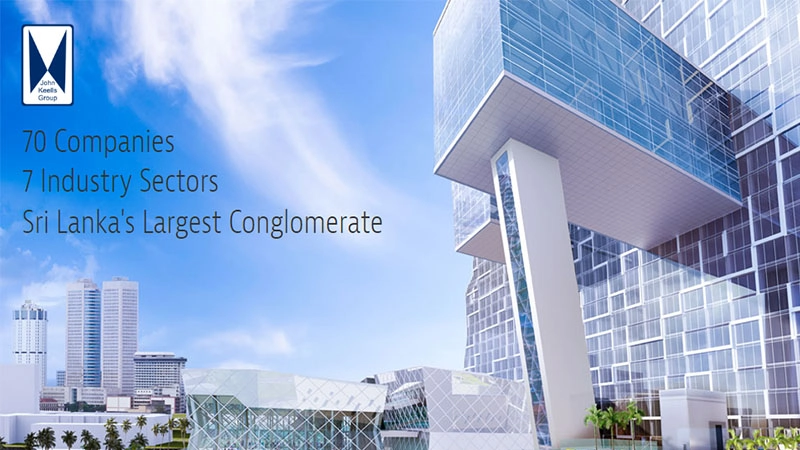
John Keells Holdings PLC (JKH) is Sri Lanka’s largest listed conglomerate, listed on the Colombo Stock Exchange under the ticker JKH.N0000 and included in the S&P Sri Lanka 20 Index. Established in 1870 and headquartered in Colombo, the Group is led by CEO Krishan Balendra. Through strategic diversification, innovation, and partnerships, JKH has become a leading force in Sri Lanka’s economy, operating across transportation, leisure, property, consumer foods and retail, information technology, financial services, and plantations.
The Group manages a portfolio of well-known brands, including Keells, Elephant House, Cinnamon Hotels & Resorts, Union Assurance, Nations Trust Bank, JKIT, John Keells Properties, Cinnamon Air, Crescat Boulevard, and KZone. Its diverse operations enable JKH to serve multiple market segments while maintaining strong brand recognition across industries.
JKH has demonstrated strong financial performance in recent years according to the financial reports. In 2023, the Group reported revenue of LKR 260.7 billion, net income of LKR 18.9 billion, and total assets of LKR 744.5 billion. By 2025/26, EBITDA had increased by 75% to LKR 80.01 billion, reflecting the Group’s resilience and diversified business model. The company employed over 28,000 people and continued to record significant growth in revenue and assets.
The Group’s expansion has been both sectoral and geographic, particularly in hospitality, retail, and consumer foods. Brands such as Cinnamon Hotels & Resorts, Keells supermarkets, and Elephant House have become market leaders in their respective sectors. Despite competition from major conglomerates such as Hayleys PLC, Hemas Holdings, Aitken Spence PLC, and Softlogic Holdings PLC, JKH maintains a strong competitive position through its scale, diversified portfolio, established brand equity, and consistent financial growth.
This article is based primarily on information, figures, and examples drawn from John Keells Holdings PLC’s Annual Report 2025/26, supplemented with publicly available financial commentary for additional sector context.
Brand Equity: Measurable Trust and Reputation
Few statistics demonstrate brand equity as clearly as independent reputation rankings. JKH was ranked first as Sri Lanka’s ‘Most Respected Entity’ for the 20th consecutive year at LMD’s Most Respected Entities 2025, and topped the LMD Readers’ Choice for ‘Sri Lanka’s Most Loved Corporate Brand’ for the second year running in 2025. Two decades of sustained leadership on this metric is a strong signal that JKH’s brand-building efforts operate consistently at the corporate level, not just within individual business units.
This corporate-level trust filters down to sector brands through awards and certifications. Walkers Tours was recognised for ‘Best Sustainable Practices in Specified Tourist Services’ at the Sri Lanka Tourism Awards 2024, while Ceylon Cold Stores PLC secured the National Award of Excellence for Best Supply Chain Practising Organisation in 2025, alongside recognition at the Sri Lanka National Quality Awards 2025. Together, these accolades reinforce a consistent quality narrative across hospitality and consumer foods — two very different customer segments unified by the same underlying brand promise.
Retail: Keells Supermarkets and Digital-First Loyalty
The retail segment remains JKH’s most visible consumer touchpoint, and the 2025/26 figures show an aggressive push toward digital engagement. As of March 2026, the Group operated 147 supermarket outlets, supported by a new distribution centre with capacity to service approximately 250 outlets — infrastructure that signals room for significant network expansion.
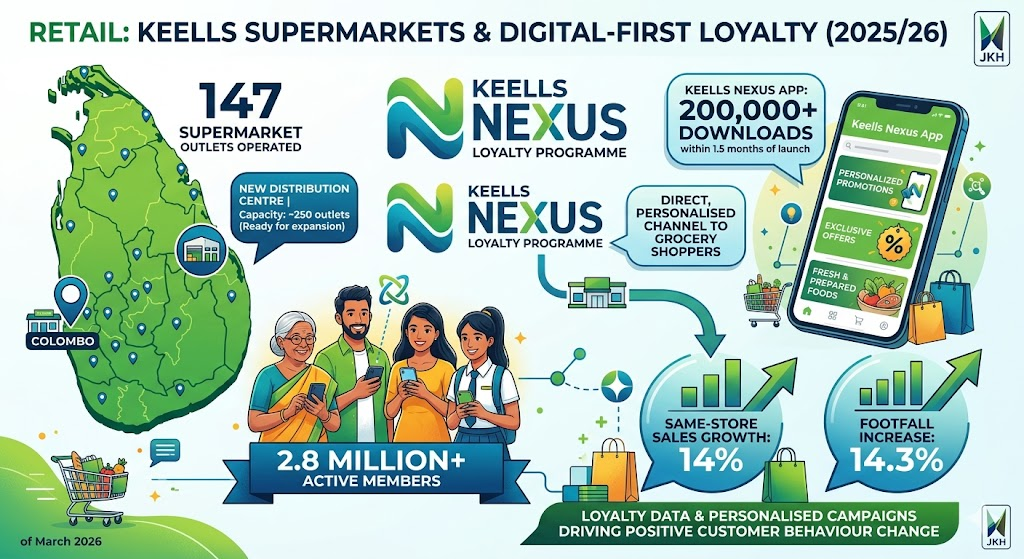
The standout marketing development is the Keells Nexus loyalty programme, which now has over 2.8 million active members. The accompanying Keells Nexus App achieved more than 200,000 downloads within just 1.5 months of launch, giving JKH a direct, personalised channel to a substantial share of Sri Lanka’s grocery-shopping population. This digital infrastructure underpins measurable commercial results: serving as a textbook example of the principles outlined in our guide on [digital transformational strategy for traditional businesses]. Same-store sales grew by 14% and footfall increased by 14.3%, evidence that the combination of loyalty data, personalised promotions, and in-store campaigns focused on fresh and prepared foods is translating into real customer behaviour change. This aggressive modern retail push offers a fascinating contrast to the strategies explored in our [case study on e-commerce and delivery app adoption at Cargills Food City], showcasing how Sri Lankan retail leaders approach digital convenience differently.”
Consumer Foods: Product Innovation Meets Regional Expansion
In consumer foods, JKH is using product innovation to capture the global health and wellness trend while simultaneously pursuing international expansion. The Group launched “Feelgood,” a guilt-free frozen yoghurt, and “Imorich,” a premium ice cream — both positioned to appeal to increasingly health-conscious consumers without abandoning indulgence-driven categories.
On the international front, Elephant House partnered with Reliance Consumer Products Limited to manufacture, market, and distribute beverages in India. This is a textbook example of brand portfolio extension: rather than building new distribution infrastructure from scratch in a foreign market, JKH is leveraging a co-branding partnership to access scale and local market knowledge, extending one of its oldest heritage brands beyond Sri Lankan borders.
Leisure: Portfolio Reshaping Through Divestment and Acquisition
JKH’s leisure brand portfolio shows active, deliberate reshaping rather than passive holding. The Group divested a 98.39% stake in Cinnamon Citadel hotel while simultaneously acquiring a 92.89% stake in Yala Adventure Private Limited. This pairing illustrates portfolio management in action: exiting a property that may no longer align with strategic priorities while entering a new experiential-tourism asset that broadens marketing touchpoints around adventure and nature tourism — categories increasingly favoured by post-pandemic travellers.
Transportation: Port Infrastructure as a Brand of Engineering Credibility
JKH’s transportation segment, anchored by South Asia Gateway Terminals (SAGT) — Sri Lanka’s first private port terminal — functions less as a consumer-facing brand and more as a credibility asset underpinning the Group’s “150 years of infrastructure leadership” narrative. JKH owns 42.0% of SAGT and 34% of WCT-1, with the West Container Terminal’s 1,400m quay length and 20m depth offering a significant competitive edge in the region. Progress on operationalising this terminal during 2025/26 reinforces JKH’s positioning as a builder of nationally significant infrastructure — a reputation that indirectly supports the trust signals (such as the Most Respected Entity ranking) that benefit every consumer-facing brand in the portfolio.
Property: City of Dreams Sri Lanka Comes Online
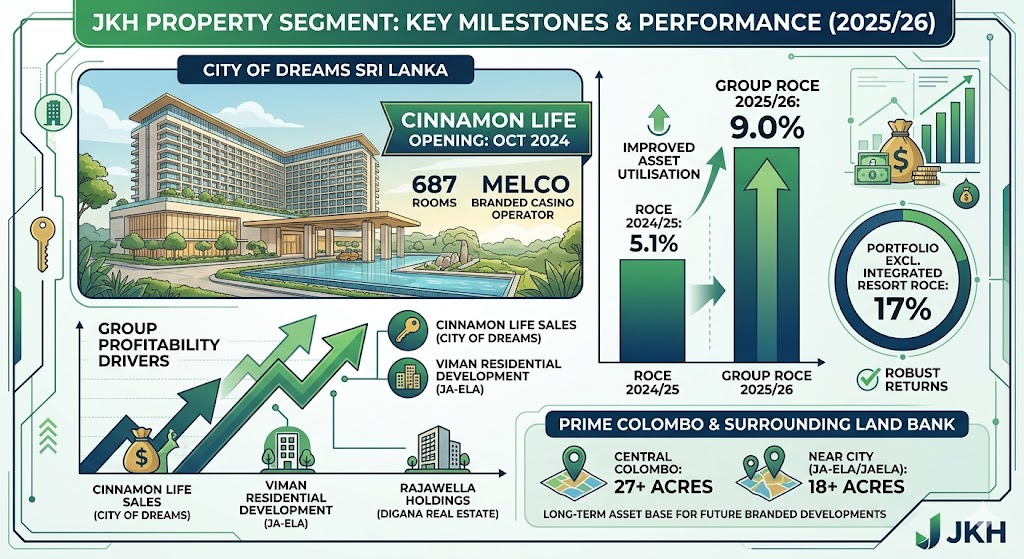
The property segment delivered one of the year’s most significant brand milestones: the opening of the Cinnamon Life hotel with 687 rooms in October 2024 as part of the City of Dreams Sri Lanka integrated resort, following the rebranding finalised with Melco as casino operator. This single asset is now a major driver of Group profitability — increased profitability in 2025/26 was driven by sales at Cinnamon Life and VIMAN (a suburban residential development in Ja-Ela), alongside real estate sales in Digana through Rajawella Holdings.
The financial impact of this property brand is visible at the Group level: Group ROCE improved to 9.0% in 2025/26 from 5.1% the previous year, driven primarily by stronger profit generation from improved asset utilisation; excluding the integrated resort (whose capital scale still weighs on consolidated returns), the remainder of the portfolio delivered a robust ROCE of 17%. Beyond Cinnamon Life, JKH’s property brand portfolio includes a prime land bank of over 27 acres in central Colombo and roughly 18 acres of developable freehold land near the city — a long-term asset base for future branded developments.
Financial Services: Nations Trust Bank and the Associate Brand Model
JKH’s financial services brands operate primarily through associate stakes rather than full ownership, making them a distinctive case in brand portfolio management — the Group benefits from brand association and financial returns without direct operational control. JKH’s ownership of Nations Trust Bank (NTB) is through a 29.48% stake in voting shares and 52.12% in non-voting shares. Despite this indirect structure, NTB and Union Assurance PLC (UAL) were named as primary drivers of the Group’s financial services EBITDA performance, alongside contributions from Fairfirst Insurance and John Keells Stockbrokers.
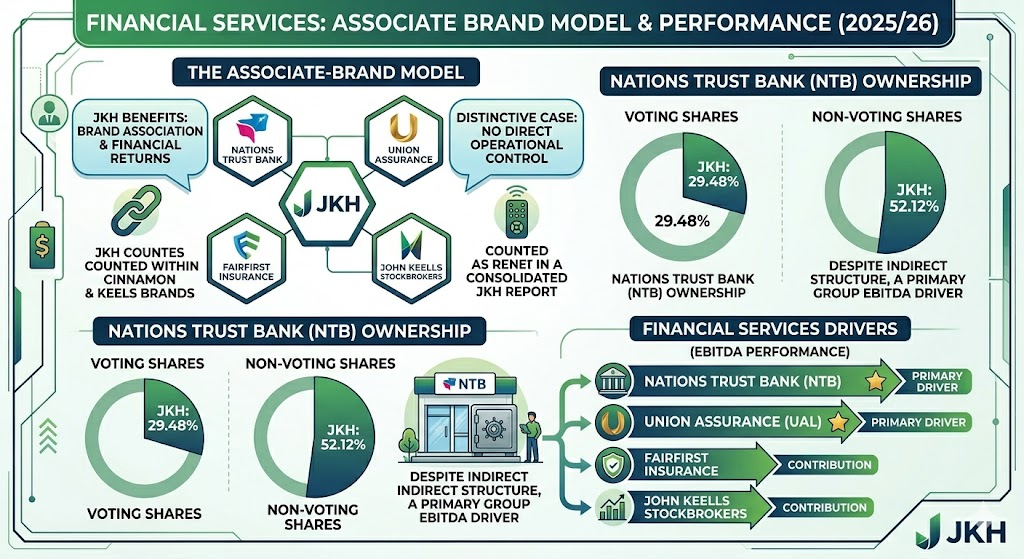
This associate-brand model allows JKH to maintain a diversified financial services presence — spanning banking, insurance, and stockbroking — under brands that carry independent market identities (NTB, Union Assurance, Fairfirst) while still being counted within JKH’s consolidated brand and financial reporting, illustrating a more arm’s-length form of portfolio management compared to the wholly-owned Cinnamon and Keells brands.
Sustainability and CSR as Brand-Building Channels
Perhaps the most distinctive feature of JKH’s integrated marketing approach is how thoroughly sustainability and community initiatives are woven into brand communications, rather than treated as separate from marketing.
The Plasticcycle initiative — a plastic collection and circularity programme — expanded to 325 locations across Sri Lanka, including high-visibility sites such as Bandaranaike International Airport. Placing recycling infrastructure at a national gateway airport functions as both genuine environmental action and a highly visible brand statement to both domestic and international audiences.
On disaster relief, the Group contributed Rs. 500 million toward Sri Lanka’s ‘Rebuilding’ efforts following Cyclone Ditwah, supporting over 2,900 school children, alongside backing for 101 SMEs through the Safe Farm to Fork initiative. These figures move CSR from abstract goodwill into quantifiable community impact, which strengthens brand authenticity claims in a market where consumers are increasingly sceptical of surface-level corporate social responsibility messaging.
It’s worth noting an honest tension in the sustainability narrative: the Group’s absolute carbon footprint increased by 18% during the year, even as it invests heavily in sustainability messaging. This highlights a common challenge for large diversified conglomerates — growth and environmental footprint reduction don’t always move in the same direction, and transparent reporting of both figures (rather than only the favourable ones) is itself part of maintaining the trust that underpins JKH’s “Most Respected Entity” positioning.
Cultural Engagement as a Marketing Platform
JKH has positioned cultural sponsorship as a meaningful brand-building channel. Kala Pola 2026, Sri Lanka’s well-known open-air art fair, showcased the work of 2,258 artists under the Group’s support. This kind of sponsorship does double duty: it creates genuine income opportunities for Sri Lanka’s creative economy while positioning JKH publicly as a steward of national culture — a brand association that’s difficult for competitors to replicate quickly.
Strategic Partnerships and Co-Branding
Beyond the Reliance partnership in beverages, JKH has pursued collaborations such as its NEV (New Energy Vehicle) partnership with BYD. These co-branding arrangements with established global names allow JKH’s sector brands to borrow credibility and access wider customer bases, particularly in categories like electric vehicles where consumer trust in unfamiliar technology partners matters significantly.
Financial Foundation Supporting Brand Investment
None of this brand activity happens in a vacuum — it’s underwritten by strong financial performance. The Group’s annual EBITDA reached approximately Rs. 80 billion, a 75% increase year-on-year, reflecting the kind of operational strength that allows aggressive, sustained investment in marketing, loyalty infrastructure, and CSR commitments without compromising financial discipline.
Key Takeaways
- Two decades of reputation leadership (20 years as Sri Lanka’s Most Respected Entity) shows brand equity built at the corporate level cascades down to sector brands.
- Digital loyalty drives measurable commercial outcomes — 2.8 million Nexus members and 200,000+ app downloads correlate directly with 14% same-store sales growth.
- Portfolio reshaping is active, not passive — simultaneous divestment (Cinnamon Citadel) and acquisition (Yala Adventure) shows ongoing strategic curation.
- Flagship property assets become Group-level financial drivers — the City of Dreams Sri Lanka / Cinnamon Life opening helped lift Group ROCE from 5.1% to 9.0%, with the rest of the portfolio achieving 17% ROCE.
- Infrastructure brands build institutional credibility — SAGT and the West Container Terminal reinforce JKH’s positioning as a long-term national infrastructure partner.
- Financial services brands operate on an associate model — NTB, Union Assurance, and Fairfirst contribute to Group brand equity and EBITDA despite being held through minority/associate stakes rather than full ownership.
- CSR is quantified and visible — Rs. 500 million in cyclone relief and a 325-location Plasticcycle network turn sustainability into tangible, measurable brand assets.
- International expansion leverages partnerships — Elephant House’s India entry via Reliance (supplying concentrate for a royalty fee, exporting Necto and Cream Soda) shows brand extension through co-branding rather than standalone investment.
- Honest reporting (including the 18% carbon footprint increase) reinforces credibility rather than undermining it.
Conclusion
JKH’s 2025/26 results show an integrated marketing strategy operating across all seven of the Group’s industry sectors — transportation, leisure, property, consumer foods, retail, financial services, and IT — each contributing a different dimension to a single coherent brand identity. Corporate reputation (Most Respected Entity) and infrastructure credibility (SAGT, West Container Terminal) provide the foundation; digital customer relationships (Nexus) and product innovation (Feelgood, Imorich) drive consumer engagement; flagship property assets (City of Dreams Sri Lanka) and associate financial brands (Nations Trust Bank, Union Assurance) anchor financial performance, with Group ROCE improving from 5.1% to 9.0% on the back of the integrated resort’s opening; and portfolio curation (Cinnamon Citadel divestment, Yala Adventure acquisition), international expansion (the Reliance partnership in India), and community trust-building (Plasticcycle, cyclone relief, Kala Pola) round out a holistic brand presence. What ties all of this together is a consistent set of values — caring, excellence, trust, innovation, and integrity — expressed differently across sectors but reinforcing the same core reputation. For marketers studying brand portfolio management at conglomerate scale, JKH demonstrates that the strongest portfolios aren’t just diversified — they’re coherently diversified, with every sub-brand activity, across every sector, ultimately reinforcing the same corporate identity. Ultimately, JKH’s ecosystem stands as a masterclass in [how technology drives business growth] when paired with a deeply trusted, multi-industry corporate brand.”
Enjoyed this article?
Stay connected for more insights on business strategy, marketing, innovation, and digital transformation.
Follow us on LinkedIn for professional discussions and industry updates.
Follow us on Instagram for business tips, behind-the-scenes content, and inspiration.
Follow us on Facebook for in-depth discussions, articles, and updates.
Follow us on Twitter for the latest industry news, quick insights, trending discussions, and real-time updates.
Have a perspective to share? We’d love to hear your thoughts in the comments.